
Our ninth council meeting of 2026 was held on Tuesday, 12 May 2026. I was unable to attend due to a dental surgery recovery day.
The full meeting agenda, reports and video recording are linked below, as well as the draft Minutes.
Halifax Regional Council – May 12, 2026
May 12, 2026 Regional Council Draft Minutes
Items most relevant to District 7 are highlighted below. A resident recently indicated to me that it is not always clear if a motion is staff initiated or council initiated. There is some nuance to this as work progresses over time, but I have tried to indicate where the motions below came from.
13.1.1 Fly-past Request – SailGP Event
(Staff) “Motion:
That Halifax Regional Council grant permission for fly-pasts, as low as 500 feet for:
1. the Canadian Armed Forces to conduct a CF-18 flypast along the Halifax side of the SailGP Race Stadium on June 20, 2026, between 3:40 p.m. and 4:00 p.m. The proposed flight path will extend from the vicinity of the Halifax Dockyard to the Seaport; and
2. Grant permission for Mustang Helicopters Inc. to conduct fly-pasts for broadcast coverage operations as part of the SailGP event on June 18, 19, 20 and 21, 2026 at various times as outlined in the request dated May 1, 2026.”
Sail GP is back next month! This motion passed on the consent agenda.
15.2 TRANSPORTATION STANDING COMMITTEE (of Council)
(TSC of Council) “Motion:
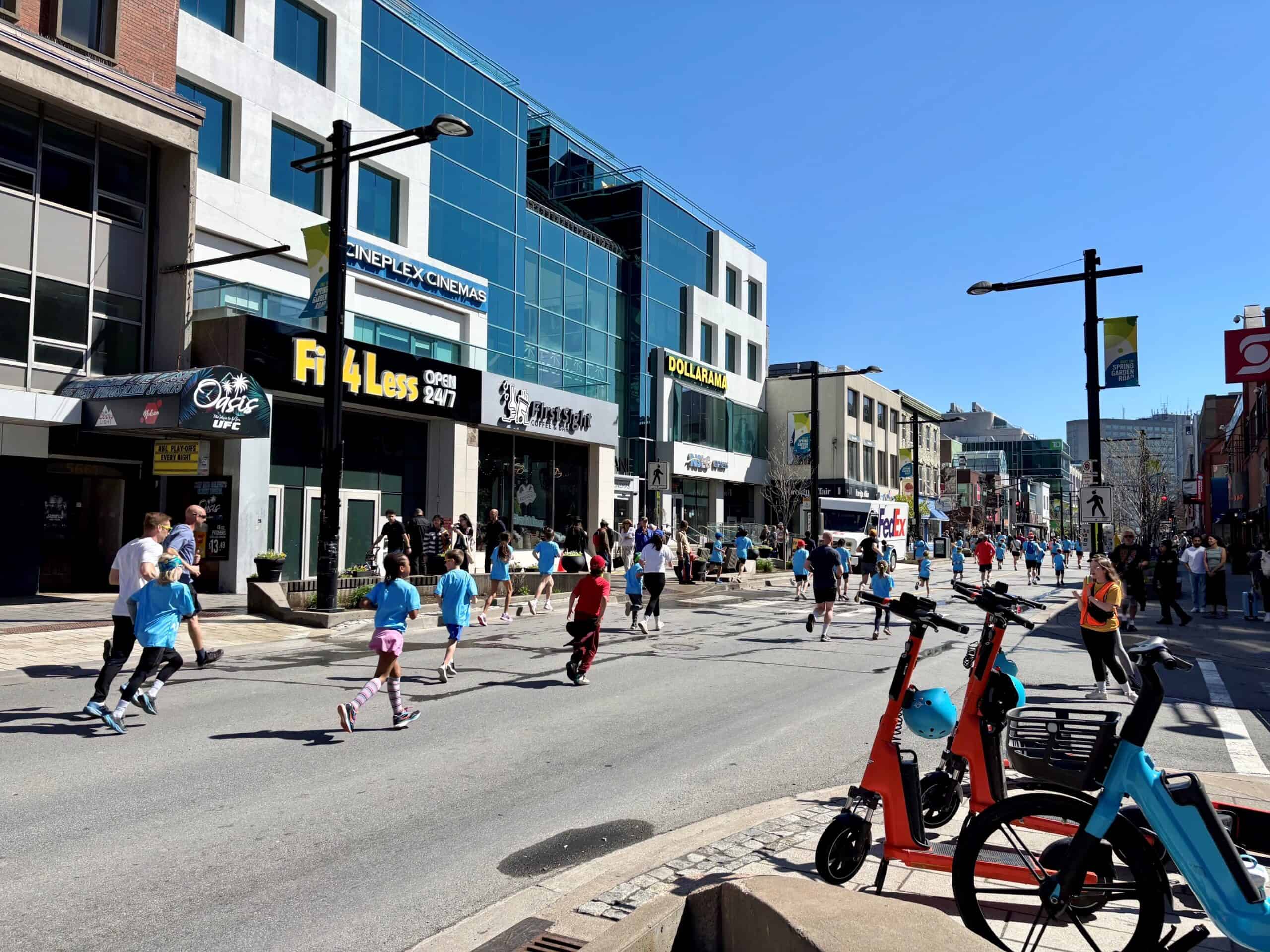
That Halifax Regional Council direct the Chief Administrative Officer to incorporate, as an option for consideration in the upcoming 2027-28 Budget, the opportunities to engage young people in the municipality’s active transportation planning and develop KPIs to track progress, as outlined in the staff report dated February 12, 2026.”
This motion passed on the consent agenda.
15.3.1 Deputy Mayor Cuttell – Review of Encroachment Fee Discounts for Hoarding Visual Improvements
“Motion:
That Halifax Regional Council direct the Chief Administrative Officer to prepare a staff report examining the encroachment fee discount currently available for visual “enhancements” of construction site hoarding, with specific consideration of:
a. The public benefit basis for providing a fee discount
b. Eligibility criteria for fee discounts
c. Practices in comparable municipalities, and
d. Policy recommendations for Halifax Regional Municipality to ensure any encroachment fee discounts related to hoarding are clearly tied to demonstrable public benefit, equity, and the quality of the public realm”
Like my motion Sidewalk Access During Building Construction from last meeting, this motion resulted from our conversation during the 14 April 2026 council meeting.
This motion passed 14 – 1 after debate.
15.3.3 Mayor Fillmore – Fee Review for Sidewalk Patio Permits
“Motion:
That Halifax Regional Council direct the Chief Administrative Officer to prepare a staff report that reviews the fees charged for Sidewalk Patio Permits and provide options to reduce or eliminate those fees, where feasible, to support local small businesses for consideration during 2027/28 Budget deliberations.”
Generally, motions by members of council are asking for a staff report. It is possible for these motions to fail, but often they are passed unanimously to look to staff for advice on topics before making a decision to move forward with a policy change.
This motion passed unanimously after debate.
17.2 INTERGOVERNMENTAL RELATIONS – Private and Confidential Report – Deferred from April 28, 2026
(staff & council iterations) “Motion:
THAT Halifax Regional Council direct the Chief Administrative Officer to:
1. Negotiate a new 5-year funding agreement with HRCE which promotes more transparency and accountability, and which focuses financial resources on music and fine arts programming while phasing out financial support for library support and social work. The agreement shall commence in the amount of $12,629,800 for the 2026/2027 fiscal year, with a further funding reduction of $889,400 in each subsequent fiscal year thereafter.
2. Authorize the Mayor and Clerk to execute, the negotiated 5-year funding agreement with HRCE as directed by Regional Council in part 1 of the motion.
3. Direct the Chief Administrative Officer to develop and issue a joint communications release with HRCE which will provide information on the key
features of the new agreement, details on the financial transition timeline, and a statement on staff resourcing.
4. It is further recommended that the report be able to be released to the public only once HRM and HRCE have issued the joint communications release.
MOTION PUT AND PASSED.”
Here is the join communications release from HRM & HRCE:
“Municipal Statement
Halifax Regional Municipality and Halifax Regional Centre for Education ratify new five-year Supplementary Education Funding Agreement
Wednesday, May 13, 2026 (Halifax, NS) – The Halifax Regional Municipality and the Halifax Regional Centre for Education (HRCE) have ratified a new five-year supplementary education funding agreement that reinforces a shared commitment to student learning through enhanced programming across the municipality.
Supplementary funding is used to support fine arts and music programming for the HRCE and the Conseil scolaire acadien provincial (CSAP) programs in the Halifax region.
The municipality’s continued commitment to supplementary education funding exists alongside substantial and sustained growth in provincially mandated education contributions. The Halifax Regional Municipality is the only municipality in Nova Scotia to provide supplementary education funding, in addition to mandatory education provincial contributions.
Key highlights of the agreement
- Sustained investment: The agreement prioritizes enhanced music and fine arts programming for students, which have been a longstanding part of this agreement. Funding for social work and library support will be transitioned out of this agreement over a period of five years, with full implementation by Aug. 31, 2031, and there will be a renewed focus on the original enhanced programming.
- Accountability and communication: HRCE will continue to highlight the partnership with the municipality, how supplementary funding is allocated, and the impact it has on students and school communities through a public brochure to families, and an annual report to the municipality. Going forward, HRCE will also make an annual presentation to Regional Council.
- Commitment to equity: The agreement reaffirms the commitment to ensure programs are distributed equitably across the municipality and continue to support students from historically marginalized communities.
This agreement maintains meaningful support to supplementary educational programming, while recognizing the broader commitment to fiscal sustainability and long-term affordability for the municipality. This renewed agreement maintains deep support to enhanced fine arts and music opportunities for students beyond provincially funded core programming.
The new agreement takes effect immediately and will guide supplementary education funding through March 31, 2031.”
Here is the full staff Q & A on the topic:
“Supplementary Education Funding Agreement Ratification Q&A
Last updated: May 12, 2026
Q: Why has the Halifax Regional Municipality negotiated a new five-year education funding agreement with Halifax Regional Centre for Education (HRCE)?
A: The municipality has negotiated a new five-year supplementary education funding agreement with the HRCE that will set out how municipal supplemental education funding is used in schools in the region in the future. This renewed agreement provides stability and clarity for both organizations while continuing to support enhanced educational opportunities for students beyond provincially funded core programming.
The new agreement will take effect immediately and will guide supplementary education funding through March 31, 2031. The original term of the current five-year agreement expired on March 31, 2024, with two subsequent one-year extensions which expired on March 31, 2026.
Q: What is supplementary funding and what is it used for?
A: Supplementary funding is used to support fine arts and music programming for the Halifax Regional Centre for Education and the Conseil scolaire acadien provincial for programs within the Halifax region. This funding is unique to the Halifax Regional Municipality. No other municipality in Nova Scotia collects property tax revenue for this purpose in addition to mandatory provincial contributions. All other municipalities remit property tax revenue for provincial contributions only. The municipality’s supplementary education funding complements a substantial and sustained growth in the provincial education contributions collected through the mandatory provincial rate on property tax bills.
Q: What are the main changes to this funding agreement?
A: Key highlights to the new agreement include:
• Sustained investment: The agreement prioritizes enhanced music and fine arts programming for students, which have been a longstanding part of this agreement. Funding for social work and library support will be transitioned out of this agreement over a period of five years, with full implementation by Aug. 31, 2031, and there will be a renewed focus on the original enhanced programming.
• Accountability and communication: HRCE will continue to highlight the partnership with the municipality, how supplementary funding is allocated, and the impact it has on students and school communities through a public brochure to families, and an annual report to the municipality. Going forward, HRCE will also make an annual presentation to Regional Council.
• Commitment to equity: The agreement reaffirms the commitment to ensure programs are distributed equitably across the municipality and continue to support students from historically marginalized communities.
This agreement maintains meaningful support to supplementary educational programming, while recognizing the broader commitment to fiscal sustainability and long-term affordability for residents. This renewed agreement also provides stability and clarity for both organizations while continuing to support enhanced educational opportunities for students beyond provincially funded core programming.
Q: My tax bill has a line item called provincial rate. How is this different than the supplementary education rate?
A: The provincial rate is mandatory contribution, as required under the Education Act. Municipalities must collect this funding through property taxes. While this rate ensures municipalities contribute to the education system, the municipality has no control over how this funding is used or the amount of the contribution. In 2026/27, the municipality will remit approximately $226.9 million to the provincial government which represents an increase of $16.2 million from the 2025/26 fiscal year. Since 2012, these provincially mandated contributions have more than doubled, rising by over $120 million and now represent a substantial and growing portion of municipal property taxation.
Q: How does this affect my property taxes?
A: The new agreement will reduce the municipality’s overall financial contribution to supplementary education funding, resulting in cost savings. This will apply to residential, resource and commercial properties of approximately 0.5 per cent on average over the next five years.
Q: Why is the municipality changing how this funding is used?
A: The new agreement explicitly includes arts and music programming as a required use of the funding, which has been a longstanding part of this agreement. While previously funded, social work and library support will be transitioned out of this agreement. The new agreement will allow for a 64-month transition period with full implementation by Aug. 31, 2031.
The agreement reaffirms the commitment to ensure programs are distributed equitably across the municipality and continue to support students from historically marginalized communities.
Q: Was this a typical timeline for reaching an agreement?
A: Agreements with other orders of government take time to finalize, especially when they involve long-term funding, a thorough review of how programs are delivered and formal approval by Regional Council. The municipality and HRCE were focused on ensuring that the agreement was clear, sustainable and allowed for a thoughtful transition that supports students and schools in the long term.
Q: Why is the municipality involved in education funding at all?
A: The municipality’s use of supplementary education funding is unique in that it is the only municipality to provide extra funding for education outside of what is already required through mandatory education funding. Supplementary education funding was originally provided by the former cities of Halifax and Dartmouth. When amalgamation took place in 1996 to create the now Halifax Regional Municipality, the province legislated through the HRM Charter that supplementary education funding must continue and be maintained to at least the 1995/96 levels. Although legislation also permits that this contribution can be reduced by up to 10 per cent (approx. $1.78M) of this original contribution amount per year.
Q: How does this affect students and families?
A: The new agreement will allow for a 64-month transition period with full implementation by Aug. 31, 2031. This approach ensures that changes are carefully planned and responsibly managed over time.
• Under the new agreement, HRCE will provide a detailed transition plan showing how changes will happen over time, well before any funding shifts take effect. This helps ensure stability for students, families and staff.
• While previously funded, social work and library support will be transitioned out of this agreement, and there will be a renewed focus on the original enhanced programming.
Q: Will residents be able to see how this money is being spent?
A: Yes, the agreement continues to provide transparency and accountability with how funding is used. HRCE will continue to highlight the partnership with the municipality, how supplementary funding is allocated, and the impact it has on students and school communities through a public brochure to families, and an annual report to the municipality. Going forward, HRCE will also make an annual presentation to Regional Council.”
At amalgamation (1995/96 budget year), the total amount of supplementary funding was $17 778 800. The budget in 2025/26 was $13 519 200. This 2026/27 budget year decision decreases the amount by 5% of the original amalgamation budget number this year to $12 629 800 (the same 5% decrease was implemented in the 2025/26 budget year) and directs 5% decreases over the next 4 years. As detailed above, council could choose to decrease this amount by up to 10%.
Personally, I would like to see the funding dollar value remain consistent, to be able to fund the supplementary arts & music education well, so I would have voted against this motion if I was present (which I doubt would have changed the outcome, but you never know, as we are influenced by each other during debate).
Trying to transfer the financial responsibility for school librarians and social workers over to HRCE, especially given the financial circumstances outlined in the staff report and above in the Q & A when it comes to mandatory education funding on HRM tax bills (assessments rise and more people live in HRM annually) makes sense to me regarding which jurisdiction should pay for these positions. The problem is, we cannot direct that library staff and social worker funding to continue, so we’re not positive what is going to happen to the positions going forward. HRM has never had direct control over how supplementary (or mandatory) funding is spent, as HRCE makes those decisions, but these agreement over the years clarify what HRM and HRCE have agreed upon will be funded by the supplementary education line item on our municipal tax bills.
The motion passed 8 – 5 during public ratification. Public ratification votes of decisions made in camera do not always have the same vote count as their in camera motions (which are not recorded).